

Liminal Flow
Type:
Installation, Temporary
Client:
Dezeen, Villeroy&Boch, Ideal Standard
Partner:
Eragatory
Location:
St John’s Gate in Clerkenwell
Status:
Concept, 2025
Design
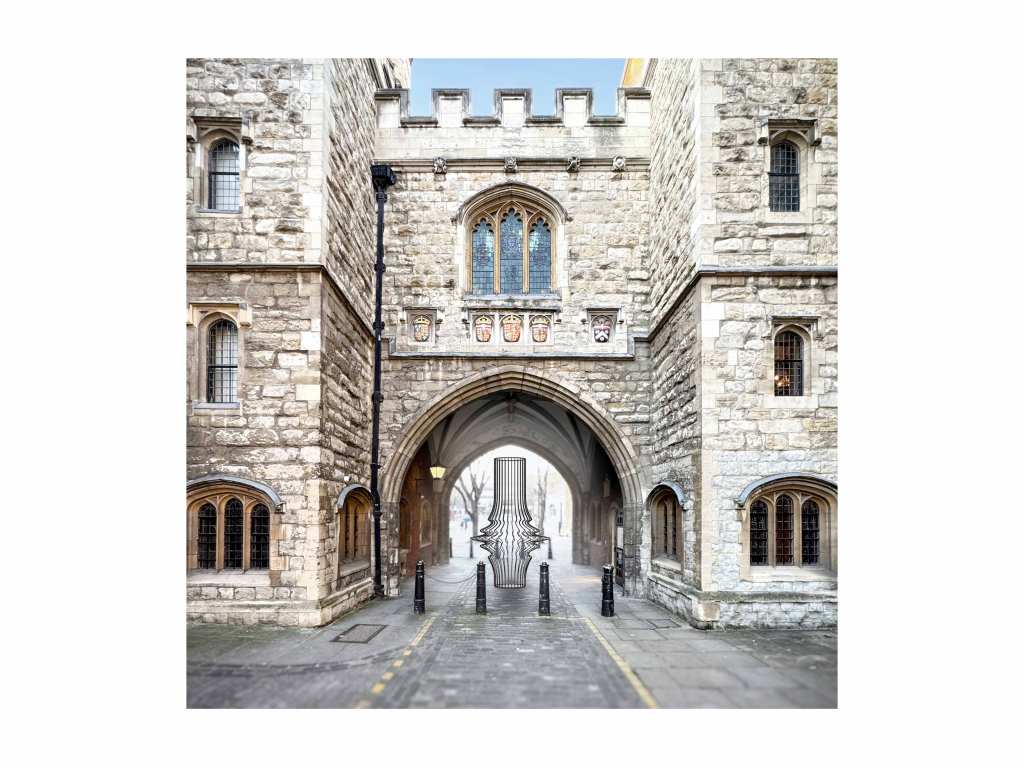
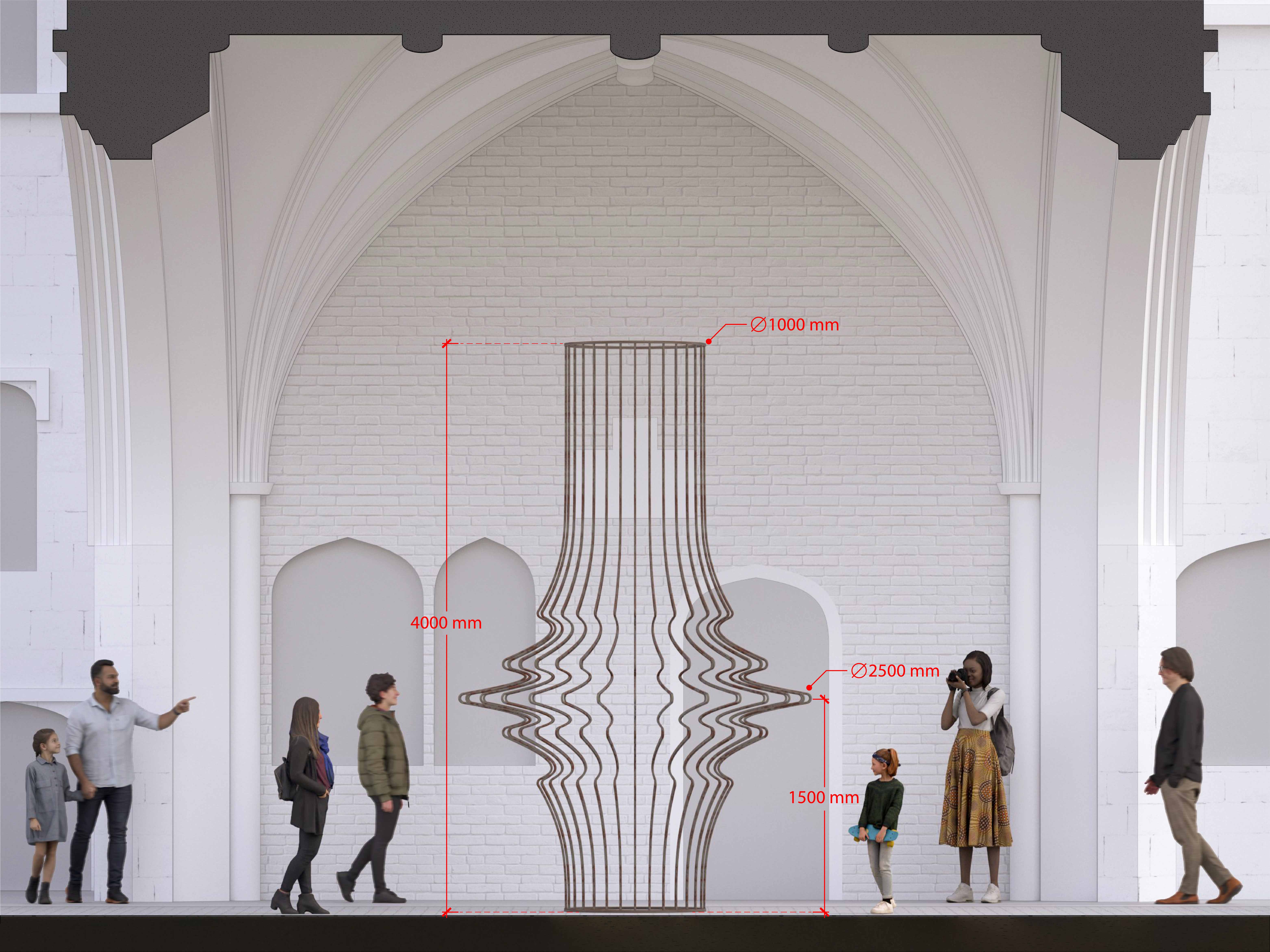
“Liminal Flow” is conceived as a four-meter-tall sculptural installation composed of thirty steel rods radiating from two circular rings at the top and base. These slender rods are shaped to form a fluid, wave-like silhouette that embodies water’s cyclical essence. The widest point of the rods, situated near eye height, acts as an imaginary reflection plane, intensifying the sensation of gazing into a still water surface. A reflective base at ground level furthers this illusion by suggesting the rods continue below the pavement, referencing London’s hidden rivers—particularly the long-buried Fleet once flowing near this site.

Experience
Though physically static, the overlapping rods appear to shift when viewed from different angles, producing a moiré effect reminiscent of shimmering water. Visitors are encouraged to walk around the structure, discovering new visual rhythms and becoming immersed in an almost “liquid” experience. This invitation to pause and reflect aligns with water’s inherently calming influence, creating a tranquil contrast to the city’s busy surroundings. In doing so, the piece demonstrates how subtle movement and layered transparency can evoke a sense of renewal.

Impact
Set beneath the historic arches of St. John’s Gate, “Liminal Flow” forges a dialogue between a significant heritage landmark and a contemporary interpretation of water’s transformative power. The vertical rods harmonize with the Gate’s Gothic lines, ensuring its architectural features remain visible. By connecting water’s deep cultural and spiritual connotations to the Order of St. John’s medical heritage, the sculpture offers an accessible, thought-provoking installation that celebrates both London’s past and its ever-evolving present.
Feasibility
Fabrication strategies have been tailored to protect the historic site and keep costs manageable. Each rod is cold-formed in shorter segments using CNC bending before being welded off-site into partial assemblies. Because these modules are sized for a long-wheelbase van, there is no need for a large lorry or specialized lifting machinery. Once delivered, the top and bottom rings are fastened to the rod assemblies through mechanical connections, removing the requirement for on-site welding and ensuring the sculpture’s lightweight structure can be anchored discreetly, sparing the Gate’s paving from heavy loads.

Sustainability & Legacy
Although “Liminal Flow” utilizes new steel, the material typically contains a high proportion of recycled content and remains one of the world’s most widely recycled resources. Sourcing steel from mills powered by green energy further reduces the sculpture’s carbon footprint. Upon deinstallation, “Liminal Flow” will continue to inspire as it is transferred to the Docklands campus of the University of East London, where it can serve as both a cultural landmark and an educational tool. By referencing water’s essential role in sustaining life, the sculpture underlines the importance of clean water in public health—a point historically evident in the Order of St. John’s philanthropic and medical endeavors.
 MIMSTUDIOS